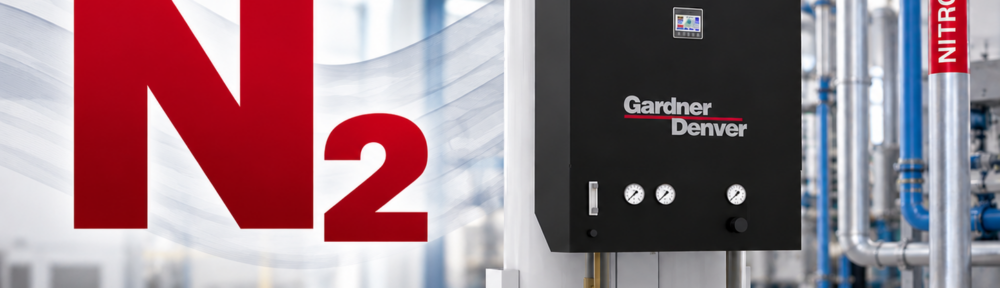
On-Site Nitrogen Generation vs. Delivered Nitrogen: Which Makes More Sense for Your Facility?

If your facility relies on nitrogen, you have two main options: continue purchasing nitrogen through cylinders or bulk deliveries, or produce it directly at your facility with an on-site nitrogen generator. 

Neither option is right for every operation. The best choice depends on how much nitrogen you use, the purity your process requires, your current supply costs, and the compressed air system available to support on-site generation. 

So, how do you know which makes more sense for your facility? 

What’s the Difference Between Delivered and On-Site Nitrogen? 

Delivered nitrogen typically arrives in cylinders or through bulk refills. For facilities with low or occasional nitrogen demand, this may be a practical way to get the nitrogen they need without investing in additional equipment. 

However, facilities that use nitrogen consistently also must manage deliveries, storage, cylinder or tank rentals, changing supply costs, and nitrogen inventory. 

An on-site nitrogen generator takes a different approach. The system uses properly treated compressed air and separates nitrogen from oxygen and other gases, allowing your facility to produce nitrogen where it is needed.  

This can give your operation more control over nitrogen availability while reducing its dependence on outside deliveries. 

When Does On-Site Nitrogen Generation Make Sense? 

On-site nitrogen generation is often worth considering when nitrogen is a regular part of your operation. 

It may be a good fit if your facility: 

  • Uses nitrogen consistently  
  • Receives frequent cylinder or bulk deliveries  
  • Pays recurring delivery and rental charges  
  • Has limited space for nitrogen storage  
  • Has experienced supply or delivery delays  
  • Expects nitrogen demand to increase  
  • Wants greater control over nitrogen purity and availability  

For these operations, producing nitrogen on-site can help reduce dependence on deliveries, limit storage and handling requirements, and create more predictable supply costs.  

PSA or Membrane Nitrogen Generation? 

If on-site generation makes sense, the next step is choosing the right technology. 

PSA nitrogen generators are commonly used for applications requiring higher nitrogen purity and consistent production. Membrane nitrogen generators provide a compact option for applications that do not require ultra-high purity.  

The right choice depends on your required purity, flow, available compressed air, operating schedule, and application. 

This is also why it’s important not to automatically specify the highest possible purity. Your nitrogen system should be sized around what your process actually requires. 

Is On-Site Nitrogen Generation Right for Your Facility? 

If your facility has consistent nitrogen demand and regularly manages deliveries, rentals, storage, or changing supply costs, on-site nitrogen generation may be worth evaluating. If your nitrogen needs are relatively small or infrequent, continuing with delivered nitrogen may make more sense. 

Lewis Systems can evaluate your nitrogen demand, required purity, existing compressed air system, air treatment, storage, piping, and current delivered-gas costs to help determine the right approach for your operation.  

Take More Control of Your Nitrogen Supply 

Ready to find out whether on-site nitrogen generation makes sense for your facility? 

CTA: Explore On-Site Nitrogen Generation 

Lewis Systems On-Site Nitrogen Generators 
5 Situations Where Renting an Air Compressor Makes More Sense Than Buying

Buying an air compressor can be a smart long-term investment, but it isn’t always the best solution for every situation. If your facility only needs additional compressed air temporarily, renting can provide the equipment you need without committing to a permanent purchase.

From unexpected breakdowns to temporary increases in production, here are five situations where renting an air compressor may make more sense than buying.

1. Your Air Compressor Breaks Down Unexpectedly

An unexpected compressor failure can quickly bring production to a stop. If repairs will take time, a rental air compressor can provide temporary compressed air while your existing equipment is being serviced.

Having access to rental equipment helps reduce downtime and keeps your operation moving while repairs are completed.

2. You Have Planned Maintenance or Repairs

Even planned maintenance can interrupt production if your facility depends on compressed air every day.

Renting an air compressor during scheduled service allows you to maintain your air supply while your primary equipment is offline. This can make it easier to complete necessary maintenance without putting normal operations on hold.

3. Production Demand Temporarily Increases

Your current compressed air system may handle normal production just fine but struggle when demand increases.

Seasonal production, a large order, or a temporary increase in workload can require additional compressed air. Instead of purchasing equipment that may not be needed long term, a rental can provide extra capacity for as long as you need it.

4. You Have a Short-Term Project or Facility Expansion

Some projects require compressed air for only a few days, weeks, or months. This could include facility expansions, new equipment installations, construction, or other temporary projects.

An air compressor rental gives you access to the additional capacity you need without investing in equipment that may have limited use once the project is finished.

5. You’re Waiting for New or Replacement Equipment

Purchasing and installing a new air compressor can take time. If your existing equipment needs to be replaced before the new system is ready, a rental can help bridge the gap.

Temporary rental equipment can keep your facility supplied with compressed air while you wait for your permanent equipment to arrive and be installed.

Find the Right Air Compressor Rental for Your Operation

Renting an air compressor can be a practical option when your compressed air needs are temporary or unexpected. The right rental can help minimize downtime, support changing production demands, and keep your facility operating without the immediate commitment of purchasing new equipment.

Lewis Systems provides short- and long-term air compressor rentals for industrial facilities throughout North Carolina, Virginia, and South Carolina. With rental options for different applications and compressed air requirements, our team can help you determine the right equipment for your operation.

Need temporary compressed air? Contact Lewis Systems to discuss your air compressor rental needs.

Air Compressor Safety: 10 Tips to Avoid Injury in the Workplace

service technician in safety gear performing a maintenance check

Air compressors are complicated pieces of machinery with many potential safety hazards. Like all high-powered machinery, air compressors require safety measures to be in place to protect operators and other employees. We’ve created an air compressor safety checklist to help keep your business a safe place to work during compressor operations, repairs and maintenance.

Continue reading →