
Compressed Air and Vacuum - Sales & Service
Greensboro • Lynchburg • Rocky Mount • Charlotte • Richmond |
Servicing VA, NC and SC
Industrial Air Compressors & Complete System Support
Build a More Reliable, Efficient System Around the Needs of Your Operation
Your compressed air and vacuum systems affect production, equipment performance, energy use, product quality, and operating costs. Choosing the right equipment is only one part of keeping those systems performing reliably.
Lewis Systems helps manufacturers, processors, and industrial facilities evaluate, design, install, maintain, and improve complete compressed air and vacuum systems.
Whether you are replacing aging equipment, expanding capacity, addressing air-quality concerns, reducing energy waste, or trying to solve a recurring system problem, our team helps you determine the right solution for the complete application.
Find the Right Industrial Air Compressor for Your Application
The best compressor is not simply the one that matches your existing horsepower.
Air demand, duty cycle, air quality, pressure, efficiency, available space, maintenance requirements, and future growth should all be considered before selecting new equipment.
Lewis Systems offers industrial air compressor technologies for a wide range of applications:
Oil-Free Air Compressors
For applications where compressed air quality is critical and the risk of oil contamination must be minimized.
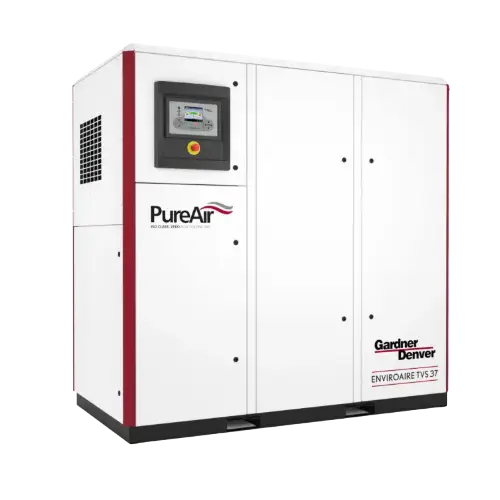
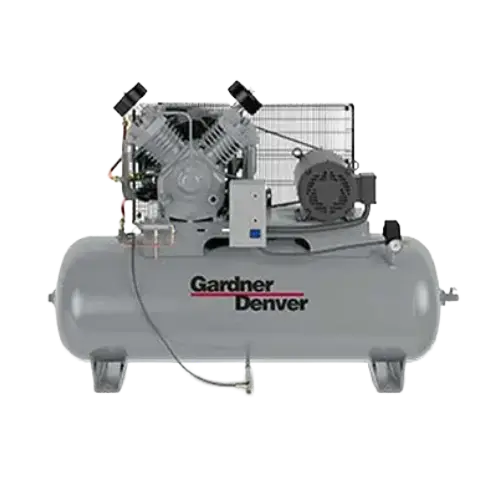
Reciprocating Air Compressors
Ideal for intermittent-use applications, smaller systems, and facilities with variable compressed air demand.
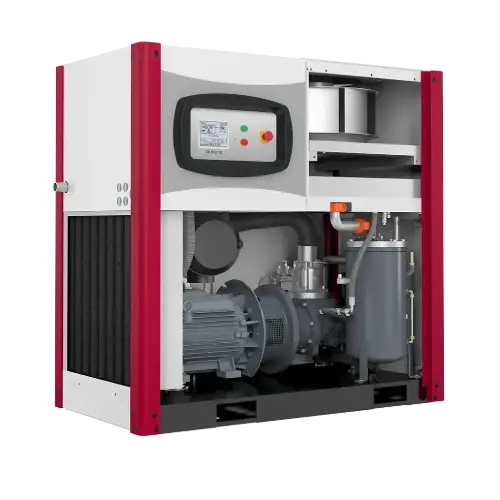
Rotary Screw Air Compressors
Designed for industrial operations requiring dependable compressed air across sustained or continuous demand.
Not sure which technology fits your operation? Lewis Systems can evaluate your current demand, operating conditions, and future requirements before recommending equipment.
Build a Compressed Air System Around Performance, Air Quality, and Reliability
A compressor can only perform as well as the system around it.
Dryers, filtration, controls, piping, storage, vacuum equipment, pressure settings, and changing plant demand can all affect how reliably and efficiently your system operates.
Lewis Systems supports complete industrial compressed air and vacuum systems with:
Refrigerated and desiccant air dryers
Compressed air filtration and air treatment
Positive displacement blowers
On-site nitrogen generation
Equipment startup, service, and optimization
Support Beyond the Equipment Purchase
Keep Your System Reliable Throughout Its Operating Life
Your needs do not end once new equipment is installed.
Lewis Systems provides ongoing industrial compressed air and vacuum support, including:
- Preventative maintenance
- 24/7 emergency service
- Compressor and vacuum repair
- Machine rebuilding
- Replacement parts and lubricants
- Short- and long-term rental equipment
- Equipment installation and startup
- Customized service agreements
From immediate repairs to long-term maintenance and equipment planning, our team helps you reduce unexpected interruptions and make informed decisions about your system.
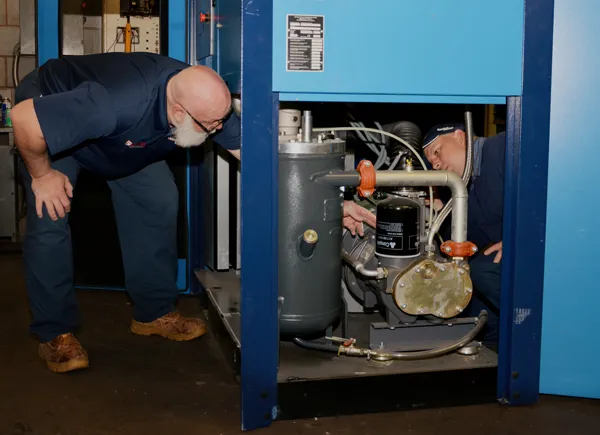
Why Industrial Facilities Work With Lewis Systems
Complete-System Expertise
We look beyond the compressor to consider air treatment, controls, piping, vacuum equipment, demand, and overall system performance.
Equipment Selected Around Your Operation
Recommendations are based on your pressure, airflow, air-quality requirements, duty cycle, available space, and future demand.
Support After Installation
Preventative maintenance, parts, repairs, rentals, monitoring, and 24/7 emergency support help protect your investment over time.
Regional Support Across the Southeast
Lewis Systems supports industrial facilities throughout North Carolina, South Carolina, and Virginia through regional teams and service resources.
Frequently Asked Questions (FAQs)
The right compressor depends on your application, air quality requirements, and duty cycle. Most manufacturing and processing facilities use rotary screw compressors for continuous operation, while reciprocating compressors are ideal for intermittent use. Oil-free compressors are preferred when clean air is critical, such as in food, pharmaceutical, or electronics applications.
Low pressure or insufficient air does not automatically mean the compressor is undersized. Air leaks, pressure drop, controls, storage, piping restrictions, or inefficient equipment operation may be reducing available capacity.
A system evaluation can help determine whether additional compressor capacity is actually required.
Lewis Systems is an authorized Gardner Denver distributor and provides equipment, parts, and service support for Gardner Denver compressed air systems.
Our technicians also service and support many other major air compressor brands, including Sullair, Ingersoll Rand, Quincy, Kaeser, Curtis, Atlas Copco, CompAir, BOGE, Hydrovane, and others. If you are unsure whether we support your equipment, send us the manufacturer, model, and serial number and our team can help confirm service and parts availability.
We provide industrial air and vacuum system support across the Southeast, with fully staffed facilities in Charlotte, Greensboro, and Rocky Mount, NC, and Lynchburg, VA—allowing us to respond quickly wherever you operate.
Improving efficiency may involve repairing leaks, reducing unnecessary pressure, improving compressor sequencing, addressing pressure drop, optimizing storage, maintaining air treatment equipment, or matching compressor operation more closely to system demand.
A compressed air audit can help identify which opportunities are most relevant to your facility.
Locations

