
Powerex Medical Gas Pipeline Equipment
Complete Medical Gas Outlets, Valves, Alarms, Manifolds, Controls, and Pipeline Support
Aging outlets, outdated alarms, difficult-to-service valves, and incompatible components can create reliability concerns and make repairs or renovations more disruptive than necessary.
Lewis Systems helps hospitals, healthcare facilities, dental practices, laboratories, and universities select, replace, install, and support Powerex medical gas pipeline equipment.
Whether you are upgrading obsolete components, expanding your facility, replacing leaking outlets, or planning a new pipeline system, our team helps you evaluate compatibility, serviceability, applicable NFPA 99 requirements, and long-term facility needs.
Keep Your Medical Gas Pipeline Safe, Reliable & Easy to Service
Medical gas pipeline equipment must safely distribute, isolate, regulate, and monitor gases and vacuum throughout your facility.
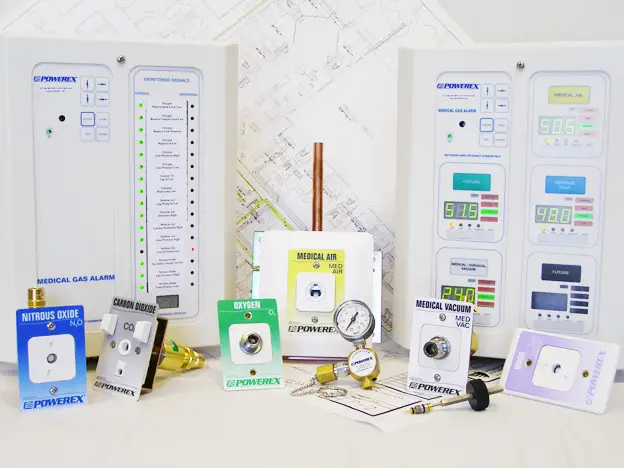
Powerex solutions include:
- Medical gas outlets and inlet connections
- Zone valve boxes and isolation valves
- Alarm systems and manifolds
- Regulators, gauges, controls, and pipeline accessories
- Replacement, retrofit, and conversion components
Lewis Systems helps facilities select, replace, install, and support pipeline equipment based on compatibility, serviceability, facility needs, and applicable NFPA 99 requirements.
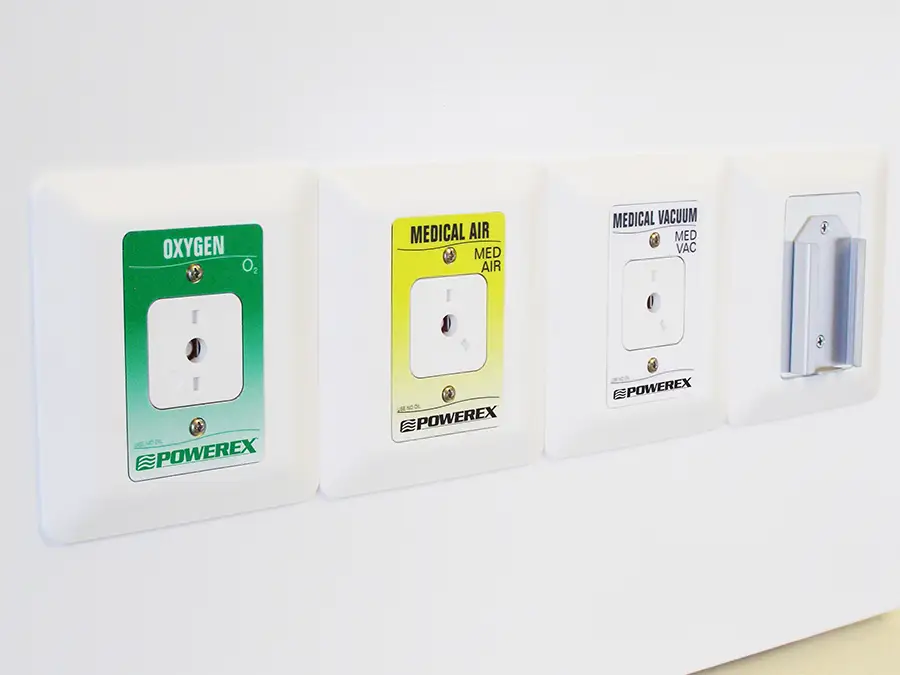
Powerex Medical Outlets
Powerex Frontall® medical gas outlets and risers provide reliable connections to your facility’s medical gas piping system while making routine service easier. Their front-loaded design gives technicians direct access to serviceable components, helping reduce maintenance time and minimize disruption to occupied areas.
Powerex also offers conversion kits for compatible medical gas outlets, alarm systems, and nitrogen control panels. These options can help facilities upgrade leaking, obsolete, or difficult-to-service equipment while retaining usable portions of the existing system, reducing the need for more extensive replacement work.
Powerex Medical Zone Valve Boxes
Medical gas zone valve boxes allow sections of the pipeline to be isolated during maintenance, renovations, equipment replacement, or emergencies.
Powerex zone valve boxes feature dual-ported valves that can be piped from either direction, helping simplify pipeline layout and installation.
Lewis Systems helps determine the appropriate valve count, services, sizes, layout, and installation approach for your facility.
Complete Medical Gas Pipeline Support From Lewis Systems
Lewis Systems provides more than Powerex pipeline components. Our team helps facilities manage equipment selection, compatibility, installation, maintenance, and future system needs.
We support medical gas pipeline projects with:
- Existing system evaluations
- Equipment and connection compatibility reviews
- Product selection
- Outlet and zone valve box replacements
- Retrofit and conversion planning
- New equipment installation
- Troubleshooting and repairs
- Renovation and expansion support
- Coordination around facility operations
- Long-term replacement planning
With locations across North Carolina, South Carolina, and Virginia, Lewis Systems supports healthcare, dental, laboratory, and university facilities throughout the region.
Frequently Asked Questions About Medical Gas Pipeline Equipment
Medical gas pipeline equipment includes the outlets, valves, valve boxes, alarms, manifolds, controls, gauges, and other components used to distribute, isolate, regulate, and monitor medical gases and vacuum throughout a healthcare facility.
In many cases, yes. Replacement outlets, repair components, and conversion options may allow an existing outlet to be updated while retaining a compatible rough-in assembly and pipeline connection.
The existing gas service, outlet style, rough-in, condition, and compatibility should be evaluated before selecting a replacement.
A medical gas zone valve box allows a designated section of the pipeline to be isolated without shutting down the entire medical gas or vacuum system. This is important during maintenance, renovations, component replacement, and emergency situations.

